

Workflow automation · 2026
Desk Automations
The unglamorous jobs between tools: routing a lead, sending the nightly report, moving a booking, firing an alert when something is late. Small loops that used to live in someone’s head.
- Unit
- One loop
- Proof
- A visible log
- Scope
- Priced to the brief
Problem
The website was live. The work after that was still a person copying a form into a spreadsheet, a chat, and a calendar. Nothing broke loudly. Things just went missing on a Tuesday.
Outcome
The repeat jobs have a written first version, a log, and a place they fail in the open. A person still decides the exception. The busywork does not wait for Friday.
The operational problem
Most operators do not need a new platform. They need the job that happens after the form: the lead that should reach the right inbox, the nightly numbers that should already be in a note, the booking that should not sit in WhatsApp. Existing tools can store a row. They do not move it. When the person who remembers the steps is out, the loop dies.
What these automations do
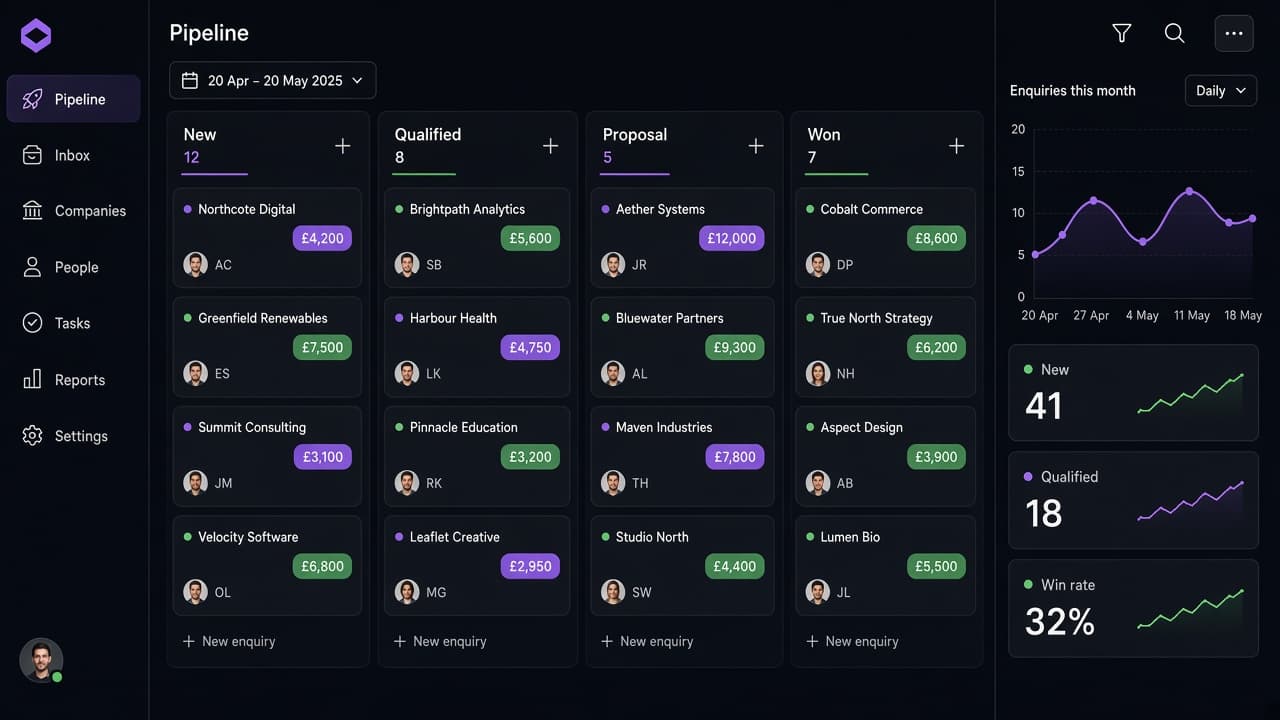
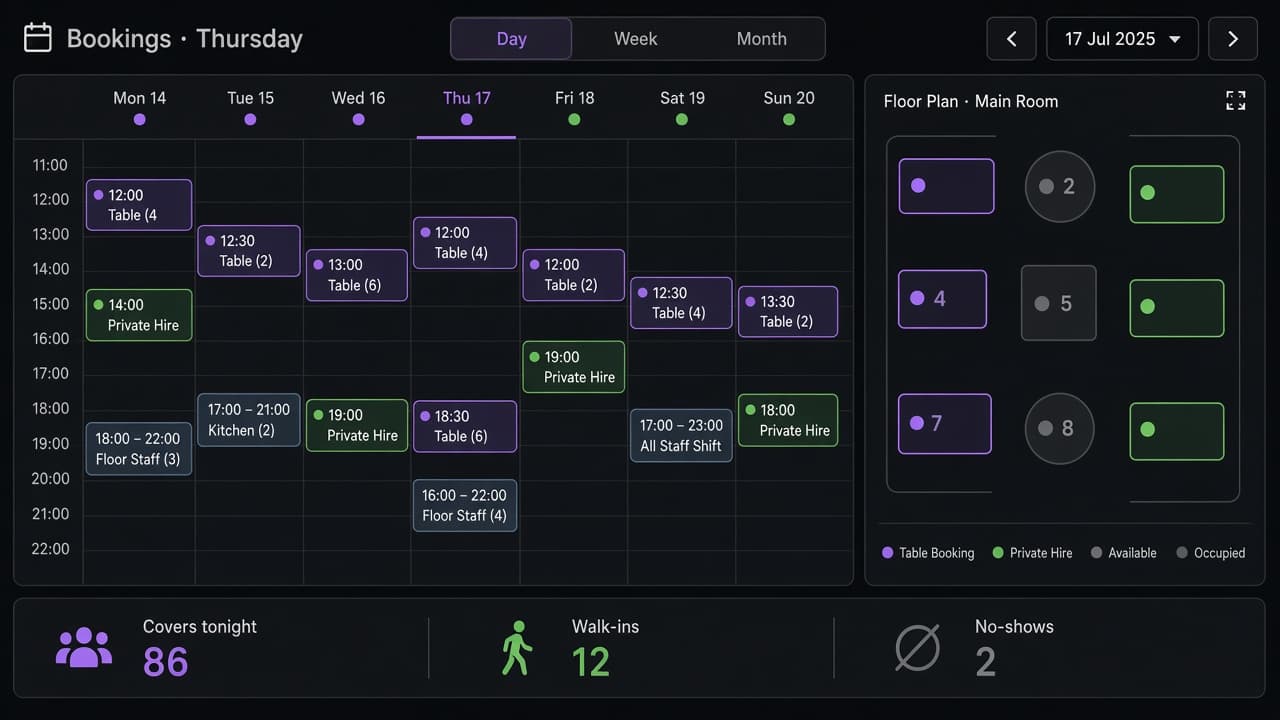
Each build is one loop with a start, a check, and a log. Lead routing. A scheduled pull into a desk. An alert when a job is late. A report that writes itself before the morning. I write the first version, you can see it fail, then we tighten it. I do not sell an imaginary employee. I sell a job that runs without being asked.
Why it sits in the portfolio
This is custom software in small pieces. The website is still the first conversation. These loops come after you can see the site doing something, or when a desk is already drowning in copy-paste. Scope is written. Price follows the brief. This page will grow as more loops ship.
What stays off the public page
No live inboxes, no customer lists, and no keys. The screens here are the shape of a desk: a pipeline, a rota, a report. If a name looks familiar, you are reading scramble.
Your project
Need something with this level of thought behind it?
Next
GuardRadar →